




Scenario 01
Designing cabling for a multi-floor office
Work out backbone routes, riser placement, and horizontal distribution for a building where the floors are not identical.
Three-Day In-Person Masterclass
A three-day live, in-person training program built around real-world cabling projects, engineering decisions, installation best practices, testing, documentation, and project delivery.
To register, message our Facebook page. We will confirm the next schedule, the venue, and what to prepare.
Inside the Training
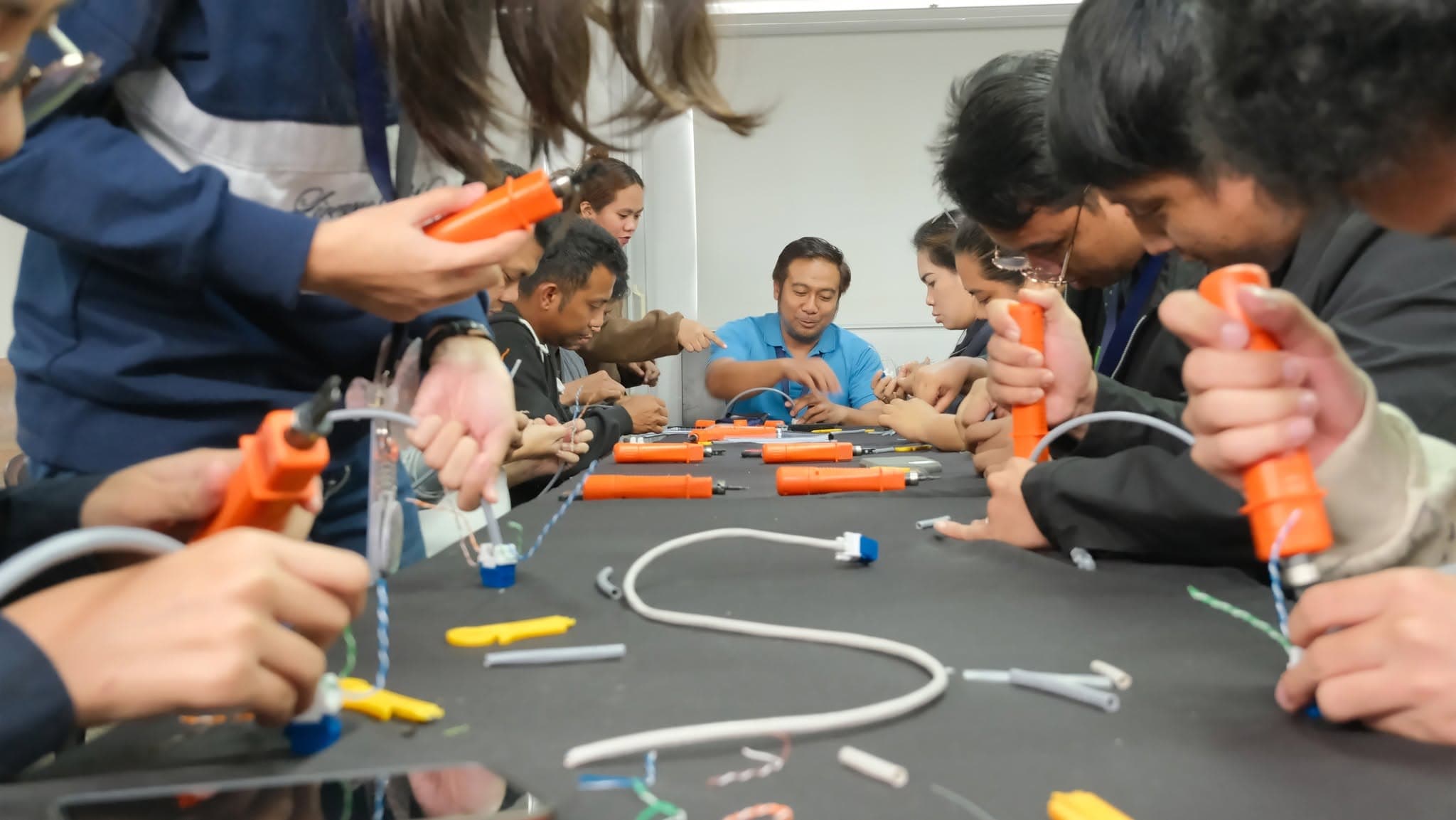
What the three days actually look like — cable and tools on the bench, terminations being made, and participants working through the scenarios.
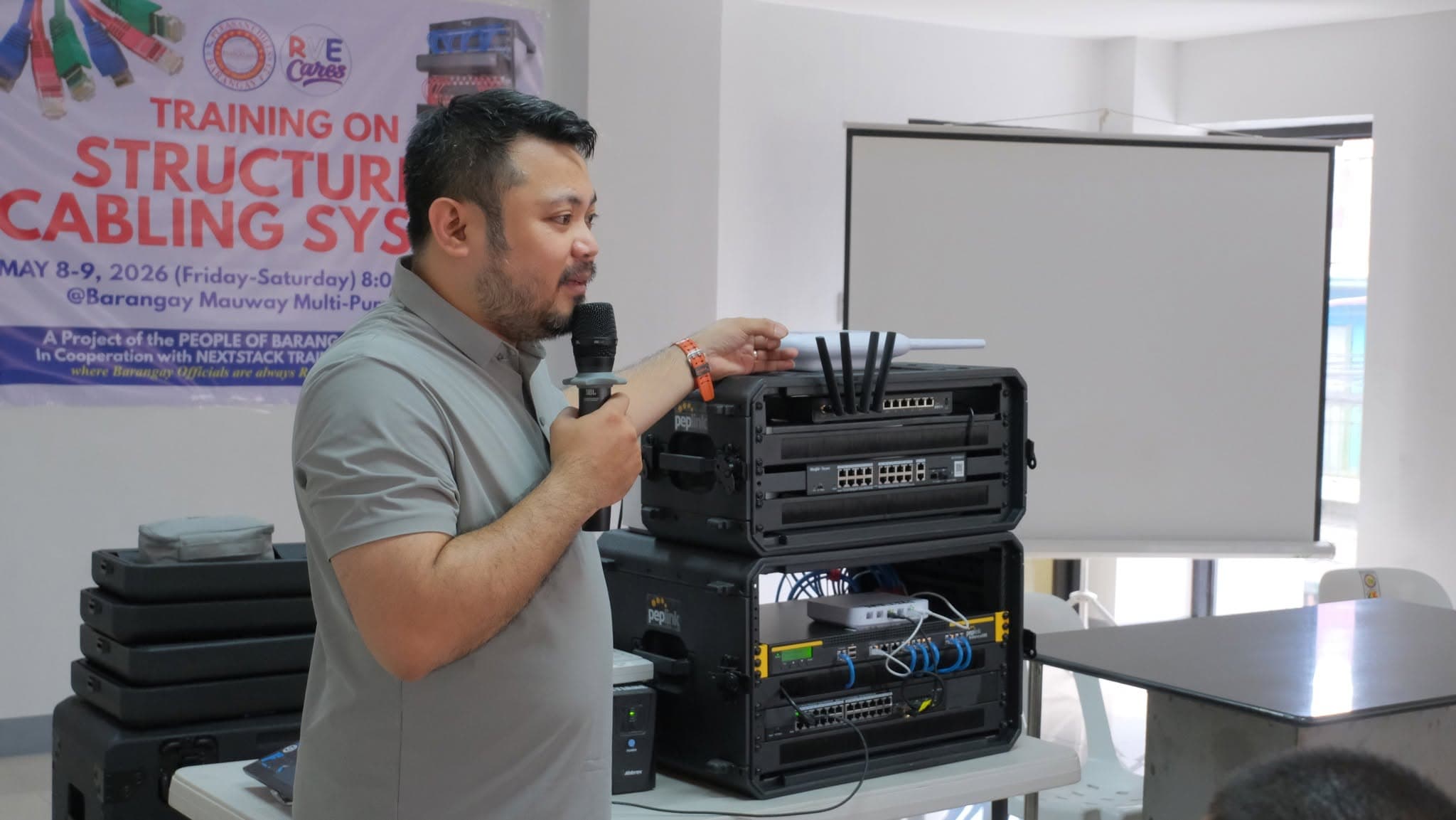
1 / 16 Opening session beside the portable training rack
The Differentiator
Anyone can be taught to terminate a jack in an afternoon. What separates a technician from someone trusted with a project is everything around the termination.
A cabling project fails long before anyone pulls a cable. It fails when the node count was never validated, when the IDF was placed where the room happened to be free, when the horizontal run quietly exceeded the standard limit, or when nobody labelled anything and the client cannot trace a port two years later.
This masterclass teaches the decisions and the discipline: how the site is surveyed, how the design is justified, how the quantities are calculated, how the installation is supervised, how the links are tested, and how the project is documented and handed over.
That is also where the professional opportunity is. Installation labour is priced by the day. Design, estimation, supervision, and turnover are priced by the project.
Walk the site, capture constraints, validate node counts, and clarify what the client actually needs.
Set the architecture, pathways, room locations, media selection, and capacity for future growth.
Build the bill of materials, apply allowances, and produce a cost estimate and proposal you can defend.
Plan manpower and schedule, control materials, supervise workmanship, and resolve on-site issues.
Test cable connections, identify and correct common faults, interpret basic test results, and document the findings properly.
Complete labelling, as-built plans, punch list, acceptance documents, and the maintenance manual.
Real-World Project Scenarios
These are the kinds of problems that appear on actual cabling projects. Each one has constraints, trade-offs, and a decision you have to justify.
Work out backbone routes, riser placement, and horizontal distribution for a building where the floors are not identical.
Decide where the rooms belong based on distance limits, power, pathway access, and what the client can realistically give you.
Validate horizontal runs against standard limits before installation, then trace a link that fails under load — isolating termination, pathway, interference, and length as causes.
Size panels, rack units, pathways, and spare capacity so the installation still has room in three years.
Turn a validated node count and layout into quantities, allowances, and a defensible material list.
Assemble labelling schedules, test results, as-built drawings, and the punch list that closes a project properly.
Global Framework
The major standards used worldwide all drive the same five-stage sequence. Every decision you make on a project sits somewhere on it — and the masterclass starts at the standards, because everything downstream inherits from them.
TIA/EIA-568 and ISO/IEC 11801 concepts are used throughout as the reference point for architecture, distances, and administration — so the decisions you make have a basis you can cite.
What Participants Will Learn
Technical mastery, presales and design, project management, and maintenance — the same sequence a real project follows.
Expected Learning Outcomes
Capabilities you can demonstrate, not a list of topics you sat through.
Gather the measurements, constraints, and client requirements a real design depends on, and record them so others can use them.
Apply standards-based architecture, choose copper or fiber appropriately, and justify each decision against distance and application limits.
Convert a design into validated quantities and a cost estimate you can present without guessing.
Plan manpower, sequence tasks, control materials, and keep quality consistent across a working site.
Understand what test results mean, trace faults methodically, and resolve intermittent problems by evidence.
Punch listing, as-built plans, labelling schedules, acceptance documents, and an operations and maintenance manual.
Registration
Schedules are announced on our Facebook page. Message us there and we will confirm the next available dates, venue details, and what to prepare for the three days.
Send us a message on Facebook with your background and the NextStack team will get back to you with the joining details.
FAQ
Yes. This masterclass is open to beginners and aspiring Structured Cabling Experts, Project Engineers, and Presales Engineers. You will learn the practical skills, industry standards, and real-world processes needed to plan, design, estimate, implement, test, and document structured cabling projects.
No — termination is a small part of it. The three days cover how cabling projects are surveyed, designed, estimated, installed, tested, documented, handed over, and maintained. Termination skill without design and project judgement keeps you on daily rates.
No. NextStack will provide all the tools, equipment, and materials needed for the hands-on activities. Just come ready to learn and participate.
Participants receive a NextStack certificate of completion. We do not claim industry accreditation for it — the value is in what you can demonstrate afterwards, and in the documentation and design work you produce during the sessions.
Yes. The program covers copper systems including Category 5e, 6, and 6A, along with fiber-optic systems, single-mode versus multimode selection, and how to choose between them based on distance, application, and budget.
Schedules are announced on the NextStack Facebook page. Message us there to register your interest and the team will confirm the next available dates and venue details with you directly.
Message us on Facebook (opens in a new tab)Three days of standards, design decisions, estimation, supervision, testing, and turnover documentation — built around the way real projects actually run.